
Bypass Surgery / CABG
Advanced coronary artery bypass surgery for blocked heart arteries with a focus on safety, precision, and recovery.
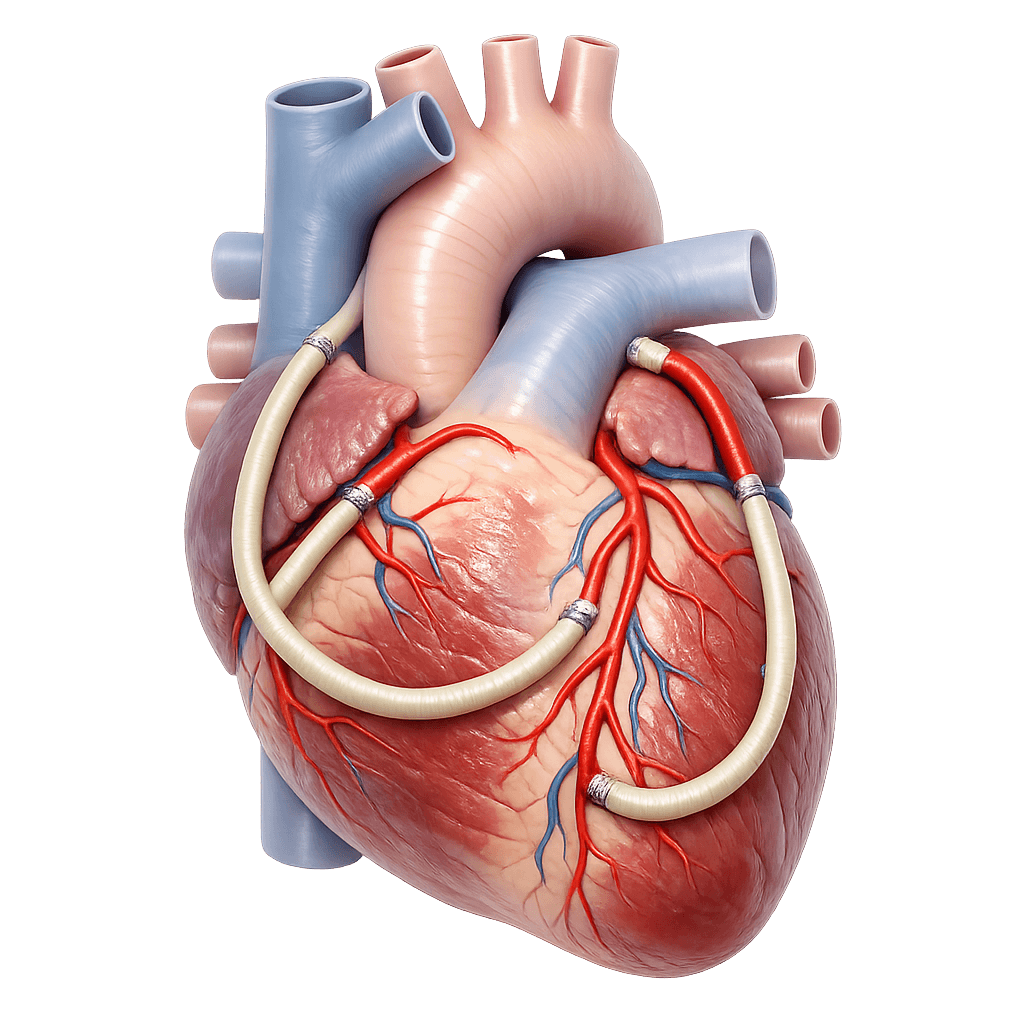
About Bypass Surgery
Coronary artery bypass grafting (CABG) is a procedure to restore proper blood flow to the heart. A healthy blood vessel from another part of your body is used to create a new path around the blocked coronary artery, ensuring oxygen-rich blood reaches the heart muscle.
Why CABG is Recommended
CABG is advised when coronary arteries are severely narrowed or blocked and other treatments may not be enough:
- Severe blockages in two or more coronary arteries
- Chest pain or angina not controlled with medicines
- Blocked left main artery or multiple blockages
- Large area of the heart at risk of damage
Benefits of Bypass Surgery
- Improves blood flow to the heart muscle
- Relieves chest pain and improves quality of life
- Reduces the risk of suffering a heart attack
- Improves heart function and physical stamina
- Long-term relief with proven survival benefits
Surgical Approach
CABG is usually performed under general anesthesia. The surgeon uses healthy blood vessels from the chest (like the internal mammary artery), arm (radial artery) or leg (saphenous vein) to create new bypass grafts that route blood around the blocked arteries and restore normal flow.
Recovery After Surgery
- ICU monitoring for 1–2 days
- Hospital stay typically 5–7 days
- Gradual return to activities in 4–6 weeks
- Guided rehab & follow-up for long-term health
When do you need Bypass Surgery?
Certain symptoms and medical situations point to CABG as the safest option to restore blood supply to your heart.
Persistent Chest Pain (Angina)
Severe chest pain or pressure that occurs even during minimal physical exertion or while resting, despite taking cardiac medications regularly.
Multiple Blocked Arteries
Widespread narrowing in two or more major coronary arteries, which significantly cuts off nutrient-rich blood supply to large parts of the heart.
Risk of Heart Attack or Failure
Severe blockages in critical regions (such as the Left Main Coronary Artery) that present a high risk of causing massive heart failure or sudden heart attacks.
Reduced Quality of Life
Severe limitations in physical activity due to rapid breathlessness, fatigue, and chest discomfort during simple daily routines like walking.
How are coronary blockages diagnosed?
A **Coronary Angiography** is the gold standard diagnostic tool to identify blockages. It provides a visual map of your heart's blood supply. Based on the angiography findings, the number of blockages, and your left ventricular ejection fraction (LVEF - pumping power), Dr. Amjad will carefully formulate a recommended treatment pathway.
The Surgical Options
Cardiac bypass surgery has evolved significantly. Depending on your health, blockages, and anatomy, Dr. Amjad utilizes advanced techniques tailored for you:
Beating Heart Surgery (Off-Pump)
Performed while the heart continues to beat naturally, without using a heart-lung machine. It results in fewer post-op complications, less bleeding, and a quicker recovery.
Conventional Bypass (On-Pump)
The heart is temporarily stopped, and a heart-lung machine takes over circulation. Used in specific complex blockages and anatomical situations where maximum stability is needed.
Detailed Recovery Timeline
Days 1–2: Intensive Care (ICU)
Close monitoring of vital signs, heart rhythm, and oxygen levels. Breathing tubes are usually removed within hours, and patients are assisted to sit up.
Days 3–7: Ward Recovery
Transferred to a private recovery room. You will walk short distances with assistance, perform deep breathing exercises, and start a light heart-healthy diet.
Weeks 2–4: Transitioning Home
Daily light walking at home, keeping the breastbone stable by avoiding lifting anything over 5kg. Regular wound dressing checks and medications management.
Weeks 6–12: Cardiac Rehabilitation
Enrolling in a customized exercise program to rebuild stamina and muscle strength under medical supervision. Full recovery is achieved at 12 weeks.
Need a Second Opinion
Before Heart Surgery?
Share your angiography and reports with Dr. Amjad. He will review them personally and guide you with the best possible treatment options.
Frequently Asked Questions
Get answers to some of the most common questions regarding Bypass Surgery (CABG).